Since we manage 73 acres of mostly forest at the end of the Anthropocene, we spend a lot of time managing invasive species. (Yes, the term is problematic and reeks of xenophobia. No, it is not xenophobic like current US policy, because it designates not non-native species but non-native bully species, ones that cannot play well with others and cause significant ecological or economic damage.) Call them disruptive exogenous species if you will.
We have a few: multiflora rose, autumn olive, barberry, privet, various Asian honeysuckles, Asian bittersweet, garlic mustard, various buckthorns, and the worst, which is swallowwort. (Well, Japanese knotweed would be the WORST worst and we don’t yet have that, but swallowwort is a bad scene.)
Since we trend hard against chemical treatment, we address most of this by pulling and strategic hacking. I have a delightful Canadian implement called a Pullerbear, which uses leverage to pull up large-ish shrubs. And my gem of a husband gifted me a Pulaski axe, which has a mattock on its other side, so that is helpful. But OMG, the swallowwort.
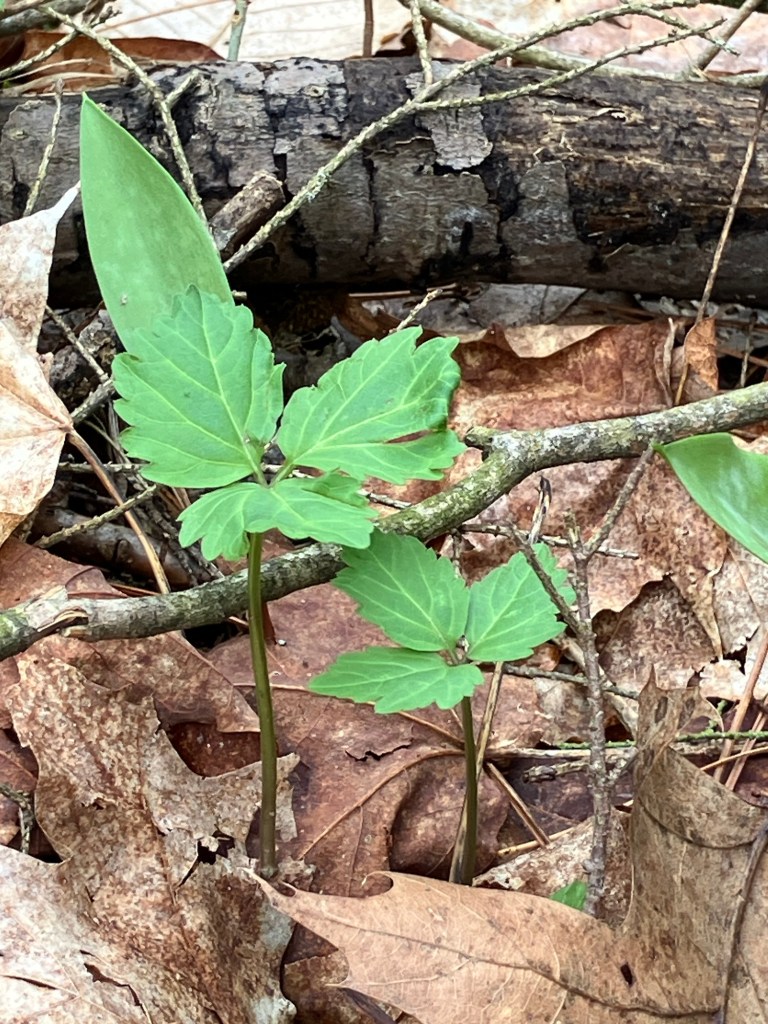
Here’s the deal with swallowwort: it has a beautiful root ball, something an artist might might sketch, and every single hair of those little roots will become a new plant if it remains in the soil after the main plant is removed. Swallowwort is gorgeous, a milkweed relative that is eaten by nothing and therefore rises perfect and glossy above its neighbors. Oh, and it poisons its neighbors via root exudates. It grows to about three feet tall before it starts vining and climbing whatever it can find, forming thick mats which give rise to its common name of “dog-strangling vine” (or goat, depending on your dominant local fauna, I guess). Then it forms perfect tiny flowers which become stunning little slim pods which then birth hundreds of seeds…you see the issue. Within a couple of years it can eliminate other plants entirely and create an impenetrable waist-high thicket over acres.
I am not one to ascribe intention to plants, especially not ill intention, as we are all just trying to survive. But as a milkweed relative, swallowwort attracts monarchs, which lay eggs on its leaves…but when the caterpillars hatch and eat the leaves, they die. I am over it.
So I spend time hand-pulling the stuff after wet weather so I can get a bit of the root ball. It’s a Sisyphean task, as I will have to pull every stem again later in the year, and again forever, but until I can get my shovel out and actually dig these things out, or tarp them for years on end, I will just keep at it. My forester says he thinks a blowtorch centered in the rootball after removing the main stem would be worth trying, and I agree as long as we are in wet soil.
(I should add that this plant drove me, for the first time in my life, to try a chemical solution, but it was not effective and apparently you have to do a LOT of chemical treatment and I am not there yet. Stay tuned.)
Final note: since what you plant is more important than what you kill, I am thrilled to say that in the pulling I have uncovered wild black cherry seedlings, Carolina rose, three kinds of goldenrod, gray dogwood, hawthorns, elderberries, and countless rubus species…the edges of woods are full of miracles.